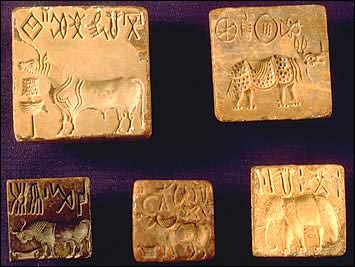
The citizens of the ancient Indian city of Mohenjo Daro were very organized people, which shows through their drainage system, and street grids. This city was occupied in the third millenium B.C., and due to the lack of evidence, archaeologists are still unsure about who were the citizens of this ancient civilization. During many archaeological digs, historians were unable to recover any evidence suggesting one central leader of the government, but it is believed that Mohanjo Daro was governed as a city-state. Seals and similar artifacts show that the people of Mohenjo Daro were excellent traders, who were very clean and modest.
The artifacts that were found suggest that Mohenjo Daro was a very wealthy city, with advanced architecture, where almost every single home was built out of baked-brick. However, evidence showing advanced religious beliefs were not found. The closest thing to a temple found was a pool, which supposedly shows that the people of Mohenjo Daro centered their lives around cleanliness.
This ancient city was excavated many times. The major digs happened in the 1920's and 1930's, while smaller digs took place in the late 1950's.
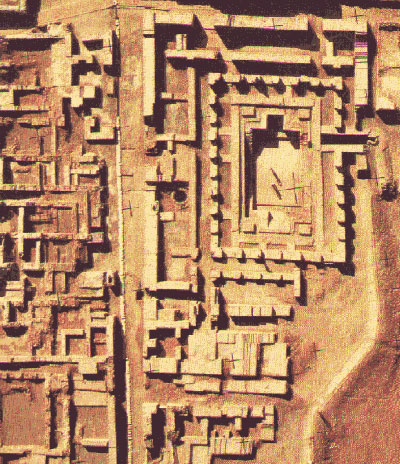
This ancient city was located in the present-day Pakistan, and many archaeologists state that it was one of the most important cities in the Indus civilization. It was fairly big for that time as well, around 250 acres of land. Mohenjo Daro consisted of a series of mounds, that kept rising as, over time, people built more walla, platforms, etc. for their homes.
One of the most precious artifacts found were sculptures of seated male figures, which were all found broken, suggesting that the foreigners who came to Mohenjo Daro after it's decline were not very fond of the native people/elders. The decline of this city, as well as the whole Indus civilization is unknown. One of the theories is that the Indus river changed it's flow, which would have greatly affected the city's economy, politics, agriculture and trade. There is also some evidence that flooding caused the end of this great city. Some historians also suggest that the city wasn't abondoned after all, just the newcomers changed the culture of the people already in Mohenjo Daro, by bringing in new ideas and beliefs.
Roach, John. "The Lost City of Mohenjo Daro." National Geographic. National
Geographic, n.d. Web. 6 June 2011.
<http://science.nationalgeographic.com/science/archaeology/mohenjo-daro/>.
The artifacts that were found suggest that Mohenjo Daro was a very wealthy city, with advanced architecture, where almost every single home was built out of baked-brick. However, evidence showing advanced religious beliefs were not found. The closest thing to a temple found was a pool, which supposedly shows that the people of Mohenjo Daro centered their lives around cleanliness.
This ancient city was excavated many times. The major digs happened in the 1920's and 1930's, while smaller digs took place in the late 1950's.
This ancient city was located in the present-day Pakistan, and many archaeologists state that it was one of the most important cities in the Indus civilization. It was fairly big for that time as well, around 250 acres of land. Mohenjo Daro consisted of a series of mounds, that kept rising as, over time, people built more walla, platforms, etc. for their homes.
One of the most precious artifacts found were sculptures of seated male figures, which were all found broken, suggesting that the foreigners who came to Mohenjo Daro after it's decline were not very fond of the native people/elders. The decline of this city, as well as the whole Indus civilization is unknown. One of the theories is that the Indus river changed it's flow, which would have greatly affected the city's economy, politics, agriculture and trade. There is also some evidence that flooding caused the end of this great city. Some historians also suggest that the city wasn't abondoned after all, just the newcomers changed the culture of the people already in Mohenjo Daro, by bringing in new ideas and beliefs.
Roach, John. "The Lost City of Mohenjo Daro." National Geographic. National
Geographic, n.d. Web. 6 June 2011.
<http://science.nationalgeographic.com/science/archaeology/mohenjo-daro/>.

No comments:
Post a Comment