Sunday, November 27, 2011

Who do you think was a more important leader, Caesar or Augustus?


Personally, I beleive that Augustus was a much better leader, politician and emperor in general, compared to Caesar. Caesar killed many people, who hurt many innocent women and children, and even though he was loved by many of the poorer people in Rome, he made many enemies. He defied the republic, and declared a civil war, knowing that he was hurting many of his own people, that believed in him and trusted him to make the right decisions. Augustus, however, made many reforms, and like he said himself, Rome was all clay and bricks, until he made it the city of marble. Augustus started importing grains and many other products from Africa and other nations, therefore increasing trade and building a better economical situation for Rome. He created a great protection for the Roman empire, with an army of over 150,00 highly skilled soldiers, all of whom were Roman citizens. Augustus also constructed many marble palaces, fountains and public buildings. He made conquests in modern-day Hungary and Romania, stretching the borders of the Roman Empire. Finally, Augustus made numerous reforms to the law and tax systems, fighting against unfair, greedy tax collectors, as well as corruption. However, most importantly, after Augustus' rule, Rome entered a glorious period in it's history, called the Pax Romana. During this time, arts and science flourished, and Rome was not involved in many wars. Economy was stable, and people lived in peace.
In conclusion, even though Julius Caesar fought for the rights of many underpriviliged citizens, and attempted to expand the Roman Empire, Augustus still had a much more positive impact on Rome's people, as well the city of Rome itself. During his rule, there was much less crime, and he was a lot less blood-thirsty in comparison to his great uncle, Caesar.

Tuesday, November 22, 2011

Julius Caesar- A Reformer or a Dictator?

I believe that despite all the great things he has done for the Roman empire, Julius Caesar was a dictator, and did seek glory for himself. For example, it is a historical fact that Caesar made some reforms to the Senate, in order to have more of his supporters in it. That way, he believed he could gurantee to stay in power, and not get overthrown by the Senate. Also, if he treated all of the defeated enemies with care, he wouldn't have conquered so much of Gaul and Britain. In order to establish new colonies and create new allies, you have to fight, and that is exactly what Caesar did. When Ceaser proclaimed the dictator of Rome for his whole lifetime, he obviously contradicted some of the basic rules of a republic. In the Roman republic, a dictator was only in charge during a time of big crisis or emergency, which led many to believe that Caesar was against Rome's original form of government.
Caesar also showed his greed for power when the Senate decided that Pompey should be the one ruling over Rome. Ceaser decided not to give up his army, and not to stop ruling, even after he has been warned. He crossed the Rubicon river, and marched into Rome with 5,000 soldiers. He knew that by doing this he would start a civil war, and yet, he still didn't care about all the innocent people that could get killed, and all the homes and farms that could be ruined, leaving many people jobless again. He wanted his power, and was going to do anything to regain it.

Wednesday, November 16, 2011

How did the geography and climate of Italy influence the development of Ancient Rome?

Geography affected Rome greatly. Firstly, Rome was located close to the Tiber River, which enabled the people who lived in Rome to trade with other nations, by crossing the Mediterranean Sea. However, Rome was far enough from the sea to be able to avoid navy attacks from other empires, as well as attacks by pirates.
The Tiber River not only represented the route to the sea for the Romans, but it also supplied them with fresh water, and food. Rome was located at a place where the Tiber River could be easily crossed, so many traders stopped at Rome to either rest or trade their goods. Rome was built on seven hills, and those hills provided even more protections against foreign invaders.
The geography of Italy itself helped unite its people. The mountains, Appanines, which run along Italy (from north to south) were not as steep and difficult to cross as Greek mountains, so people had no need to live in small, isolated villages. The mountains also had many flat plains which were ideal for growing crops. The farmland was very good in Italy, and that enabled more people to settle there. Another mountain range, the Alps, which run along the north border of Italy, protected the empire from European invaders. The Alps are very steep and very high.

Tuesday, November 15, 2011

The founding of Rome

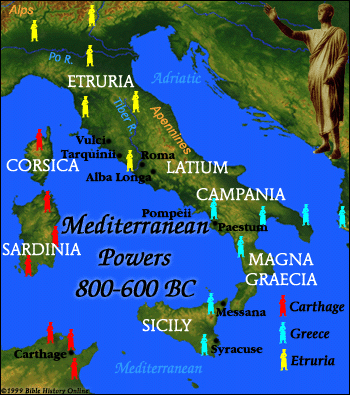
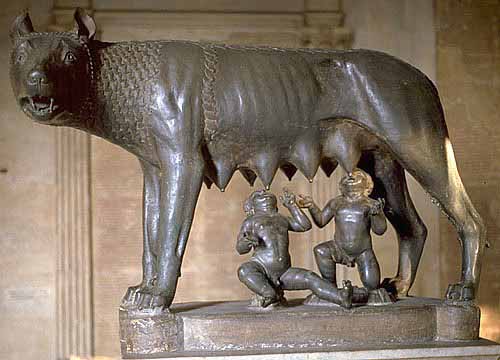
There are two legends that exist about the finding of Rome. The first one is a classical tale about two brothers Romolus and Remus. According to the story, they were left on the banks of the Tiber River, and were found by a wolf. They were raised by a shepherd. Together, they made a decision to build a great city, around the 700s B.C.E. However, they got into many arguments. One day, Remus started mocking a wall/fortress that his brother was building. Romolus got extremely angry, and killed his brother. He, then, later found the great city of Rome. The other tale was written as an epic poem by one of Rome's great poets, called Virgil. According to Virgil, Aenaes, a great Trojan hero, came to Italy (the mouth of the Tiber River), when Troy got captured by Greece. Then, he married a Latin princess, and united the two kingdoms. However, the truth is that historians are not really sure about how Rome was found. The most accpeted theory is that the Latins lived together on the hills of Italy around 1000 B.C.E.They farmed the land, and built small huts. Around the 800 B.C.E. the small Latin communities started joining together for protection, building the foundations of Rome. The Etruscars (people who came from Etruria, in the north of Italy) took control of Rome in 650 B.C.E. They got very rich by mining and trading, as they were excellent metal-workers. They developed and influenced Rome greatly. They built the first wooden and brick houses in Rome, and built the first streets and temples.

     
The two pictures show the epic poet, Virgil, as well as the two brothers Romolus and Remus who supposedly got raised by a wolf and shepherd.

Sunday, October 30, 2011

Does Alexander the Great deserve his title?

I do believe that Alexander the Great deserves his title, because he managed to do things that no one else in that time period did. He conquered many city-states, and gave them the opportunity to grow and develop by giving them money to keep the Greek culture alive, by building temples, etc. Alexander made many great accomplishments after his father, Philip, got killed. He managed to conquer Tyre, which is one of the last Persian bases. He conquered parts of Egypt, and in Egypt he found a great city, Alexandria. Alexander the Great's empire stretched all the way to India!
However, beside conquering many city-states, Alexander also deserved his title because, in my opinion, he was a very strong person. When his father got killed, Alexander took over the empire fairly quickly, even though he was very young, only about 22 years old. It also must have taken a lot of courage to leave his hometown of Pella (the capital of Macedonia) at a young age, and go off with an army of 35,000 soldiers to conquer new lands, and never come back.
Alexander also shows his strength when he died with his army. In summer of 326 B.C.E., Alexander and his army reached the Hyphasis River in India, and led his military through the desert. The conditions in the desert were horrible, and Alexander fell ill. He died in Babylon.
Alexander the Great was a very strong leader, who was determined to spread the Greek culture around the world, and establish new colonies, as well as achieve new conquests. Like it was said in the textbook, "Alexander the Great was a brilliant general. By outwitting enemies, he defeated armies much larger then his own." (page 376).


Thursday, October 20, 2011

A Day In A Life Of A Metic In Athens


I woke with the sun rays beaming from the open door of our small mud brick home. I stand from the uncomfortable straw bed, and go to join my wife, and our two daughters for breakfast. As all of us glance at our neighbors' house, we see their two slaves washing a tunic with hot water. We sigh as we watch the poor woman scrubbing the tunic with her injured, red hands, her dirty black hair hovering in the wind. Of course we feel sorrow for her, but we would give anything to have someone helping us in the house. Of course, the house is not our family's. As foreigners, we cannot own any property in Athens, so we are staying at one of the wealthy land owner's houses. Every month I go to his lavishly decorated home at the bottom of the Acropolis, to pay him with olive oil and grapes, for letting us stay at his house for a while. He ought to kick us out soon though, as he keeps complaining that what we are giving him is not enough. 
For breakfast, we eat a grape each, and drink some water. It is all we can afford right now, as the business is not going as well as we expected. Once we finish eating, everybody goes to their daily chores. My wife immediately starts weaving, hoping that we will be able to sell some of her colorful designs at the agora. My younger daughter takes her clay and starts trying to be helpful, by making a strange, curved pot. All of us laugh, as she is only six, and is not very skilled yet. However, my older daughter is great at making jewelry out of rocks, plants and many other things she finds around Athens. Today I am going to the agora to sell her necklaces, and we are all hoping that it goes well. I take all the trading items, and silently step out of the house into the fresh morning. People are hurrying around everywhere, mothers waving to their sons who are running to school. Men are headed to the agora, some to trade, some to chat, and some to exercise. No one notices me, a poor, scruffy merchant, with his hands full of merchandise. 
As I get closer to the agora, many more people start entering the huge open space. I quickly grab my usual place before any other trader does, and display all of the goods that I have brought. Then, the usual routine starts. I start shouting at the people who pass by "Necklaces! Jewelry! Very cheap!". Some people stop and look at them, others just hurry by quickly, without even noticing me. The first person to buy a necklace is a small, old man, probably buying gifts for his daughter. He picks out a necklace made out of pink thread, and bright orange rocks. In return, I ask for a pint of olive oil, and a few grapes, so that I could pay the land owner once I head back home. The day starts getting extremely hot and unbearable, and the customers stop coming as men go into to the gymnasium for the afternoon. So I decide to end the day, and go see a play in the theatre. Metics are not always allowed to attend plays, but today I am hopeful that I will be let in. 
I take a seat at the very far back, where you can see the whole performance well. It turns out that today a tragedy is being played. Actors take the center stage, and with their depressed, sad-looking masks start saying the lines of their dialogue. After some time, the play finally ends, and the actors bow down, with everyone cheering. I leave the theatre, and head straight home, knowing that I am already quite late. When I get home, I see that my wife has already prepared dinner, a few loaves of bread with olive oil. My daughters devour the loaves ravenously, and my wife and I start talking about how much we miss Thebes, and the life we used to have there. We were citizens, and had many rights. But, now we are in Athens, and we need to focus on getting as wealthy as we possibly can before we go back home. 
After we are finished I say good night to my family, and go to sleep, knowing that tomorrow will be another day of hard work.

Tuesday, October 11, 2011

"The Spartan Way" article summary

Sparta was a great and powerful city-state in Ancient Greece. It was the society of soldiers. The qualities that were widely respected in Sparta were strength, misleading the enemy by telling lies, and feearlessness concerning battle and death. Spartans brutally trained their men, so that they could become a most-feared army in Ancient Greece.
The biggest rival of Sparta was the city-state of Athens. Athens was the home to many artists and thinkers, but also the birthplace of democracy. Sparta was run by an oligarchy of a few powerful and very wealthy families. Spartans, however, left very few writings, and very few artifacts behind, so most of what we know about Sparta today has come from enemies and visitors.
In Spartan society, only 10 percent of men had full citizenship. Citizenship was gained at the age of thrity.  Their only job was to be soldiers in the army. They weren't allowed to persue other jobs and occupations. Spartan soldiers ate their meals in an army mess hall, away from their families, where the food was deliberately bad-tasting.
Sparta had very harsh laws. For example, all newborn babies were inspected by the government, and if they looked unhealthy, they were left on a mountain to die. Also, boys left their homes at the age of seven, when they started training with other children their age. The conditions for them were very difficult. They were beaten, but were expected not to show any suffering or pain. They were provided with very limited amount of food. Girls were also had very difficult training, becuase it was believed that fit women are more likely to give birth to healthy offspring.
Women in Sparta had much more freedom then other women in Greece. They could be owners of land, run businesses, etc.
Beside the women and male citizens of Sparta, there were two other types of people, and those were the perioeci and the helots. The perioeci were the people who lived in towns around Sparta, and provided food for the Spartans. They had no rights whatsoever, but could grow rich as traders or craftsmen. The helots were slaves, and they were owned by Sparta. Their job was to work at the farms of Sparta, and they were treated very cruelly.
After the Peloponnesian War in 404 B.C.E., Sparta beat Athens, and became the most powerful city-state. But, in 371 B.C.E. the city-state of Thebes beat the Spartan army, and Sparta collapsed.

Price, Sean. The Ancient World. N.p.: n.p., n.d. Print. The Spartan Way


Monday, October 10, 2011

The values of Ancient Greeks

a) What values were most important to early Greeks and why were they considered important?

Ancient Greeks had a couple of values that they considered extremely important in their society, and encouraged all their citizens to acquire these values, through myths, stories, legends, etc. These values were intuition, hospitality, justice, ingenuity, loyalty, respect, teamwork and athleticism. These values were created during the age of the Mycenaeans (during the age of heroes), and they soon became the foundation of Greek society. This means that the people who showed these values were considered good citizens, and were more accepted and respected in the Greek society. One of the most famous epic poems from the Ancient Greece, the Odyssey, which was written by Homer, shows these values through many different examples. Penelope shows loyalty, by waiting for her husband Odysseus for ten years, and by rejecting all the other men who come to ask her hand in marriage. Odysseus and his men show teamwork by coping with many difficulties throughout their journey, like being captured by the Cyclops, being turned into pigs by Circe, etc. Another value that was really showed in the Odyssey was athleticism. Odysseus had to be quite athletic in order to shoot the arrow so that he could prove to his wife that he is in fact Odysseus once he comes home. Also, it sure takes a lot of athletic abilities to be able to survive on the sea for ten years.

b) In what ways are early Greeks values found in modern society?

Some of the values of Ancient Greeks are still around, and are still widely respected in different countries, and in different cultures, while some completely faded away. One value that is respected all around the world is ingenuity. People who are always creating new, innovative and interesting products are greatly respected around the world, and their works are considered pieces of art. Athleticism is another value that is widely respected. Great athletes, such as football players, and basketball players earn a lot of money, and are portrayed as idols and role-models. They also get a lot of media attention, and are known world-wide. Another value that is still around in the modern days is justice. People who do not respect laws, and who commit crimes are usually punished for their wrong-doings. Respect is also another value that is considered important in our society. We are always taught to respect opinion, ideas, cultures and religions that are different from our own.
However, one value that is not as respected in the modern times as it was in Ancient Greece is intuition. Back in Ancient Greece, intuition was very important, and it was also considered very important to listen to it. But, nowadays, people rely more on facts and opinions to make decision in life, rather then their gut-feeling.


Sunday, October 9, 2011

The Ancient Olympics article summary

We know that the Olympics started very early in Ancient Greece because the Olympics were mentioned in numerous writings by Ancient Greek poets. The Olympics were held to honor Zeus, the most superior god, and the god of the heavens. The Olympics were always held at a sacred site called Olympia, and all wars and conflicts were stopped during the games, to show respect for the gods. The Olympic Village had many different sporting facilities, including a hippodrome for chariot races, a gymnasium and steam baths.
The first man to win an Olympic event was Coroebus, who won a footrace in 776 B.C.E., the only Olympic event that existed at the time. He was rewarded with olive branches. In Olympic competitions, only the citizens of Ancient Greece were allowed to participate, which means that slaves, foreigners and women were banned from entering the competitions. These citizens needed to be very wealthy, because they needed to have enough money to travel to Olympia, and hold a great banquet and celebration if they won. However, by the time of the 128th Olympics, women were allowed to compete, and the first woman to win an Olympic event was Belisiche from Macedonia.
Like it was said above, Olympics first started out with just footraces, but aftwerwards, more sports were added, chariot racing, wrestling, and even a brutal sport pancratium. In this sport the competitors bit, strangled and kicked each other. This usually resulted in one of the competitors being either injured or killed.
"No matter how great their passion for conflict, however, the Greek's high regard for physical beauty was greater." (Theodore Knight, page 170). This quote shows that despite some of the brutal sports that took place at the Olympics, Greeks appreciated the muscled runners, and pentathlon participants, who were usually the ones awarded.
When the Olympics were very popular, they included five days of different activities, including parades, feasts, etc. Sacrifices were also made. Usually, on the third day of the Olympic festival, 100 cattle were slaughtered to honor Zeus. Olympics didn't only attract athletes, however. Rulers came negotiate with other city-states, while merchants came to trade their goods.
The Olympics started neglecting after the Romans conquered Ancient Greece. They were more interested in war and trade, rather then art, religion, and athletics. During the Roman Olympics, contenstants started cheating, bribery increased, and more brutal events were added. However, around 393 A.D., when Christianity spread, all pagan rituals were banned including the Olympics.
But, in 1896, the Olympic games revived, thanks to Baron Pierre de Coubertin, who organized the first modern Olympic Games in Athens, Greece.

Knight, Theodore. The Ancient World. N.p.: n.p., n.d. Print.


Thursday, September 29, 2011

Mycenaeans and Minoans

Mionans

The Minoans were people who lived in Crete, and their civilization lasted approximately 600 years, between 2,000-1, 400 B.C.E. The Minoans were a peaceful nations, and did not tend to get in wars and conflicts with other nations or city-states. They were great metal-workers, and used bronze to create tools for farmers and fishermen. They also used gold to craft magnificent jewellry.
The palaces on Ancient Crete were also very grand, and they were open/accesible to all citizens of the Minoan empire. The palaces were made out of stone and wood, and besides housing the royal family, they also served many other purposes. They had storerooms, where grains and olive oil was kept, and sunken pits that they used as ritual baths. Since the Minoans were not blood-thirsty, they didn't have any protective walls or gates around their palaces.
Minoans were also amazing potters. They made storage vessels out of baked clay, which they used in trading with Spain and Egypt. Pots  were also made, and they were painted in all kinds of different colors, including yellow, green and red. On their pots, Mionans showed pictures of the nature (plants, animals and fish).
Minoans were monotheistic, as they only believed in one goddess, the Mother Goddess. They worshipped her in small altars, or in caves. It was believed that she protected animals, birds and fish. It was also believed she was responsible for harvest and crop growing. Mother Godess had three sacred symbols' the lion, bull and snake.
The water systems in Ancient Crete were very advanced, as they had drainage pipes, which were made out of stone and clay. Minoans also had baths that could be transported from one room to another, and had flushing toilets!
Finally, the Minoans used a system of writing that consisted of pictographs, and which was written on stone tablets. This language, called "Linear A", was written in linear arrangement, and has not yet been translated.


An example of Minoan art.

Mycenaeans

The Mycenaean culture was settled around 2,700 B.C.E. They were a very blod-thirsy nation, who spent most of their energy on creating a good military and navy. Most of the myths about the Greek heroes and famous battles come from the Mycenaean oral tradition.
Mycenaeans were great metalworkers, and made a lot of bronze weapons, as well as chariots, They also created jewellry, just like the Minoans.
Mycenaeans palaces were grand, and had battle scenes, as well as scenes of plants and animals painted on their walls. However, only the royal family could enter the palaces, except when a war was going on, and Mycenaeans needed to go somewhere in order to protect themselves. That is why the palaces had huge, protective walls around them.
Mycenaeans were also good potters, but not as good as the Minoans. They did not use as many colors as the Minoans, and the potter's wheel was not used. They made pots to store grains and wine, and scenes of battle were painted on these, as well.
Mycenaeans were polytheistic, because many gods (the earlier versions of the Olympians; Zeus, Hera, Aphrodite, etc.) were added to their original goddess, the Earth Goddess. All the gods were worshipped in small altars. Evidence of grand temples was not found.
Mycenaeans also had an advanced water system, with drainage pipes. They also had stone baths, that were fixed to the wall and to the floor, and could not be moved around. The floors of Mycenaean bathrooms were all very nicelt decorated.
As for the writing, Mycenaeans used a system called "Linear B", which consisted of characters. Their writing was translated, and it was written on clay tablets.
The government of Mycenaeae was hierarchial, as they had kings and military officials in the highest positions, and slaves and prisoners of war in the lowest.

 
Walls around a Mycenaean palace.


What aspects of both civilizations would you expect to survive in later periods of Greek history?

I personnally believe that almost all the aspects would survive later in Greek history. First of all, the skill of metalworking would be passed on from generation to generation, and Greeks lateron used that skill to build even more amazing weapons and ships. The religion remained the same, excpet for a few things, like the fact that Ancient Greeks started building grand temples to honor their gods. Pottery and writing were always around in Ancient Greece, as pottery kept the Greek culture alive because of the painted scences, and it also served them with trade. Writing was a way to record poems and stories from that time, as well as talk about how people back then lived, how they participated in wars, etc. The Minoan and Mycenaean empires were the bulding block of Greek culture, and most of the aspects that were found in their culture and society, were also found in the times of Classical Greece.

Sunday, June 12, 2011

My amazing, time-travelling adventure!

Slowly I board the amazingly big time-travelling machine, and I turn the small key, closing the door behind me- Suddenly, with the speed of light, the huge machine starts spinning around with the speed of light, and then comes to a sudden halt. I drag open the heavy metal door, and look up at the cloudless sky, and the blazing sun. I look down, and see the endless grasslands of prehistoric Kenya. I see a neanderthal holding a large axe and running after a big mammal, with huge horns. In the distance, I see that someone has lit a fire in a dark cave. I start approaching it slowly, and I see a group of neanderthals making tools out of stone. On the other side, a few neandertals were making fire by using two small rock flints. Fire was very important for early humans because it enabled migration to colder areas, the development of oral tradition, as well as cooked foods. Suddenly, I spot a smaller cave just a few blocks from where I was standing. I approach it, and as I get inside, I see a huge brown buffalo drawn on the cave wall. It wasn't very detailed, but it still resembled the big mammal. As I look at the painting I hear someone start screaming and rumbling. I couldn't understand anything, but I saw a neanderthal female approach, carrying a small, stone bowl, filled with all sorts of berries. She starts staring at me, probably wondering what to do. As se realizes that I have no intention of hurting her, she starts squishing the berries with her hands, and then splashing the reddish color on the walls of the cave. I sat next to her, and take a small bit of the color, trying to draw a strawberry. When i was done painting, the tiny woman dragged me to the larger cave, where I could smell the scent of cooked meat. She rumbled something, and tapped the ground, inviting me to have a meal with them. The meat was a bit raw, but I still had a blast with the neanderthals! After I examined some of their axes, flints and daggers I headed back to my time-travelling machine, to examine some other part of human history.


Before I even had a chance to properly close the door, the machine started whizzing  quickly, before, again, came to a very sudden stop, that frightened me a bit. I step out, and immediately recognize the great river of Euphrates, in Sumer, Mesopotamia. Before me lies the first human civilization ever. Hunter-gatherers are long gone, and before me I see the signs of first real homes, with crops planted along the dark-blue Euphrates. As I get closer, I see domesticated animals, including cattle, and sheep. From the domestication of animals, Sumerians could get milk, meat, wool and other products much easily then they could before. Along the Euphrates, I see a man pushing a wheel-barrow, filled with wheat and barley. The Sumerians were the people who invented the wheel, and with the wheel came the wheel-barrow, which enabled humans to transport their goods in a faster, more efficient way. I decide to follow the young trader to the market. When he came, he placed the wheel-barrow down, in a shade of a tree. The crowd was very big, people coming to trade their goods for something else they needed, and traders and merchants keeping records of what they sold in a bhula. I look down, and on the dry mud I see a small clay pot, and I decide to trade it for an interesting artifact from Sumer. I approach one of the merchants, and show him the pot. He nods his head, and hands me a small figurine of a girl dancing, made out of stone. Realizing that I do not really have a choice, I take the small figurine in my hands. I decide that I should be heading back to my time-travelling machine, but on the way, I see an old man playing a wooden, very crude flute. My mind immediately thinks about the specialization of labour. With the domestication of animals, and the settlement of humans, not everybody needed to farm, so some Sumerians started persuing other careers and jobs, in this case music. I sit down by the Euphrates, listen to the enchanting melody. As I glance up, and see the sun set, I rush back to my time-travelling machine, wondering where it might take me next.


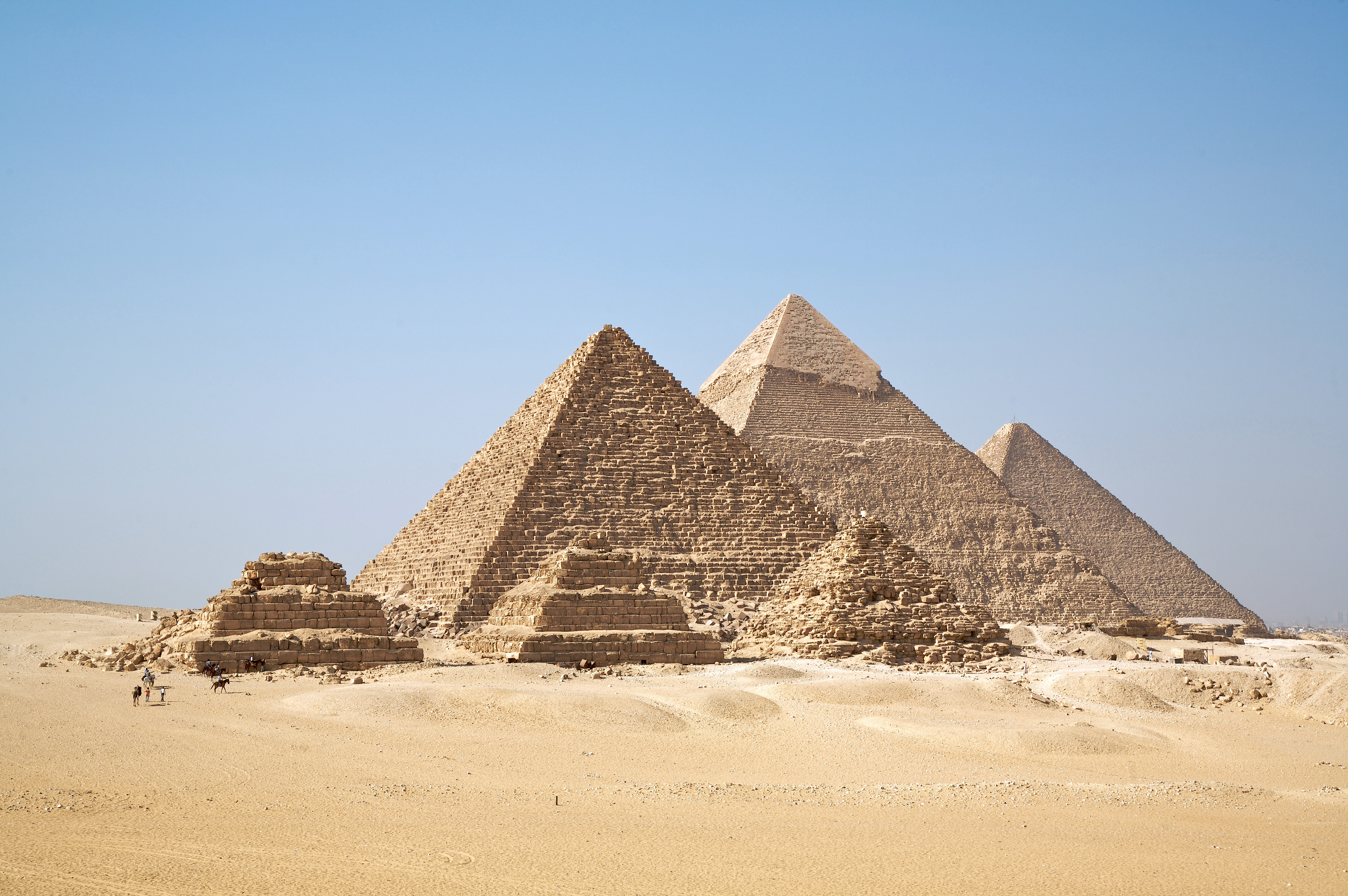
I enter the time-travelling machine, and, again, with a blink of an eye, I find myself opening the heavy door. A smile spreads across my face, as I observe where the machine has taken me this time. The magnificent Ancient Egyptian pyramids are towering above me, blocking the hot sun. I was so intrigued by them, that I decide to enter the pyramids, and hopefully see one of the wrapped up mummies. I examined the outside of the pyramid, going around, pressing every other rock, in an attempt to find the door. Suddenly I start falling forwards, and I see a narrow hallway in front of me. I rush in, expecting for the door to close, just like it does in movies. To my obvious excitement, it stayed open. I follow the narrow hallway, and enter a room, where I saw a few people cutting up a body. I was disgusted, but as I look more closely, I see that they are actually taking out body parts from the dead pharaoh and putting them in jars. Once they were done, they washed the body, and wrapped in some sort of white cloth. Afraid that the Ancient Egyptian doctors might see me, I rush back outside, onto the boiling sand. I walk, and walk, thinking that Egypt is not as interesting as I anticipated, when I see the Nile in the distance. I run towards it, and see one of the first sail boats float along it. I remember how I learnt that Ancient Egypt relied on the Nile for everything. Egyptians needed the Nile for agriculture, and for growing crops. Egyptians also relied on the floods of the Nile to nourish their crops, through irrigation systems. The Nile was also important for the development of Egyptan culture, as Ancient Egyptians connected many gods to the river Nile. As I observe the Nile's banks, as well as the Sahara in great distance, I realize that it is time for me to go. I run back to the machine, and off I was, to another period in human history.


Next, I am going to Ancient India. The machine stops, and as I step out, I see that I have landed in the morthern part of Ancient India, near the river Ganges. From what I have learnt I know that in the west is the Thar desert, to the north are the great Himalayas, to the south is the Deccan Plateau, and to the east is the Bay of Bengal. As I start walking along the Ganges, I see a person cleaning up the river's banks. Immediately, I know that this is one of the harijans, or the untouchables. I lookd down, feeling sorry for the porr man. In Ancient India, the caste system was very strict. On the top were the brahmin, or Hindu priests. Then come the Kshatrya, or the government officials, including warriors and nobles. Next come the Vsatrya, and this caste consists of merchants, artisans, etc. On the bottom are Sudra, or the laborers and slaves. The Harijans, or the untouchables are the people who are so low that they do not even belong to a caste. They do all the work that Hindus cannot, such as cleaning the sewe systems, or cleaning up the banks of the Ganges. The further down I walk, I see people on boats, throwing ash into the Ganges. I get shudders, thinking that those ashes are actually a burned person, who was cremated. For a second I feel sorry for the person's family, but then i remember in the Hindu process of reincarnation. Hindus believe that once a person dies, their soul will be reborn again. If the person had a good karma, they will be reborn into a higher caste, but if their karma was bad, they will be reborn into a lower caste, or even in an animal. But, if the person had an almost perfect life, where they prayed a lot, and where they became an ascetic at the end of their life, their soul could be united with brahman. I walk further down the Ganges, and see a majestic Buddhist temple, with Buddhist monks meditating in front of the gates. I am guessing that they are trying to reach nirvana, or eternal peace in Buddhism. Suddenly, rains tarts pouring down! Oh, no! It is monsoon season! I run back to the time-travelling machine, thinking that it is time to go back to 2011.


Before I go back home, I feel that there is something that I should do. I decide that I want to go on an archaeological dig, and experience that, as well. I decide that I would like to go on an archaeological dig to Mohenjo Daro, which is a city in Ancient India, that is located in present day Pakistan. Once I get there, I start excavating right away. First, I draw a grid of the whole excavation site, and then I start digging. on the first layer, I find some kitchen midden, so jsut rocks, dry mud, and other things, that I put into a seperate bag, regarding them as unimportant. Then, I found a solid rock, that wouldn't move. As I excavated around it, I realize that I have recovered a house! The house was made out of baked bricks. Then, I started excavating deeper and deeper, until I found something that really caught my attention. It was a small figurine, that was made out of wood, which I put into a small bag, which other archaeologists could later give to scientists, for radiocarbon dating. I also recovered some trading golden coins, which I put into a bag, so they could be examined, and then given to a museum, or used in other educational purposes. I started feeling tired, so I decided that it was time for me to go. I waves goodbye to Mohenjo Daro, and India, but also to the amazing travelling adventure, that I will remember during my whole life.


Monday, June 6, 2011

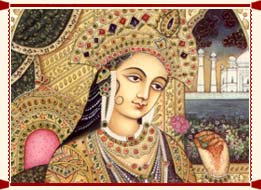
Taj Mahal


A very long time ago in India, people who were called Mughals ruled the land. They were very wealthy, and lived in amazing palaces, and rode gold-and-silver adorned elephants. It is among the Mughals that a prince called Khurram was born. Khurram was very well educated in arts and sciences, by the finest tutors. With his father and advisors, he discussed important country matters. However, Khurram was not complete, as his thoughts became to turn into love, and he could never see girls his own age. But, one day, during the New Year's festival, Nauroze, Khurram saw a beautiful girl selling silk, whom he really started to like. His friends told him that her name was Arjumand, and that she was the daughter of the prime minister. The prince bought an expensive jem from the girl, and was encahnted by her, hoping to see her again in the near future. When Khurram asked his father, Emperor Jahangir, to marry Arjumand, the king refused, because she was not a royal. However, after consulting aith astrologers and advisors, Jahangir finally agreed. In India, the groom could not see his wife until the day of the marriage, so Arjumand and him communicated through letters and poetry. Soon enough, the day of the marriage came, and Arjumand and Khurram became husband and wife. Emperor Jahangir re-named Arjumand to Mumtaz Mahal (the jewel of the palace), because he was impressed with how kind and beautiful she appeared to be. Mumtaz and Khurram were always together, and Mumtaz gave birth to many children. Even when Khurram went into battle with his army, Mumtaz went with him, because they could not be seperated. In 1627, Emperor Jahangir died, leaving the whole empire to his son, Khurram. The people loved their new ruler, as well as his wife greatly. During one of the battles, Mumtaz accompanied her husband pregnant, giving birth to a daughter far away from home. Mumtaz was very weak, and died shortly after Khurram came back from battle. Khurram was devastated, but to let the whole world know of their love, he built his wife an amazing tomb, consisting of crystals, corals, topazes, and many other expensive jewels and materials. After many long years, Taj Mahal was finally finished, together with it's majestic garden. Finally, the emperor was at peace, as his silently said, "It is as perfect as our love."


The Buddhist Eightfold Path

Choose one practice from the Buddhist Eightfold Path and describe how you could incorporate it in your life OR provide an example from your life of a time when you have demonstrated one of the practices.

Tha paths that I would like to focus on for this blog post is right effort and right speech. I think that right effort is the path that is extremely important, and that everyone should try to strive towards. Without putting some thought into what you do and without trying your best you will never be able to achieve what you would like, or what you are hoping to. Everything in life is difficult, and you need to face the problems and tasks standing in your way, giving your best effort to overcome them, and bring yourself closer to your goals and dreams. I think that this whole year, at least for me, was about the right effort. Sometimes in school I had assignments that I had a horrible attitude towards, but I realized that if I wanted a good grade, I would need to develop a good attitude and try my best. One of those assignments was the 3D elevation map we had to make in humanities. I thought that I would never be able to do a good job, because I am not very skillful when doing projects that are not necessarily based on writing. However, I decided to give it my best shot, and I ended up being really proud of what my partner and I accomplished.

As for the right speech, I chose this path because I feel that I could incorporate it mor einto my life, and try to improve. When I am angry or frustrated at someone I tend to say all sorts of things, not really paying attention to wether that might hurt the person who I have a conflict with. I have to learn to be more calm, and try to solve a conflict I have with another person through conversation, that should not involve mean and abusive language that only has one goal, and that is harming the other person. Also, I think that I should improve on being an honest person. When people ask me for advice, I usually tell them what they want to hear, not necessarily what I think is the right thing to do, so I would like to start avoiding lies and start being a better human by following the Buddhist path of right speech.


Reflection on the maps of India

a) How do physical features, climate and elevation relate to each other?
Physical features, climate and elevation are all linked to each other very closely, and I have learnt that through this unit, through examples. I will talk about the geography of India. Along India's nothern border stands a tall mountain range, Himalayas. Himalayas are at a very high altitude, causing the climate to be very cold and very harsh. But, since the elevation of the mountains is so big, the Himalays block the cold, northern winds from reaching central India, causing the climate to be quite warm, in central and southern India. The Thar desert is at a very low altitude, and the temperatures vary quite a bit, meaning that during the day, it is very warm and dry, while nights can be below freezing! The thar desert is one of the driest places on Earth, where precipitation doesn't occur often. India is also made up of it's many rivers, which start at the tall peaks of Hindu Kush and Himalayas, roll down the hills, and into the valleys. The valleys of Indus and Ganges Rivers are quite rich in fertile soil, which is being deposited along the rivers' banks. One of the events that happen anually in the Indian climate are the monsoon. Winter monsoon are quite dry, but in the summer, the winds from the south pick up the moisture from the sea, carrying it to India, and causing havey rainfall and flooding.


b) What conclusions can you draw?
(Think about natural resources, climate/weather, and human settlement.)

In terms of human settlement, I think that in ancient times, and nowadays, people tend to settle in areas where they can easily accustom to. This means that people settle in places where there are a lot of natural resources, where the climate is not that harsh, and where the terrain/physical features are not that demanding. That is why a lot of people of the ancient Indus civilization tended to settle along the banks of India's rivers. There are a few reasons for that. Firstly, the land was very good for farming, because of the sediment that was deposited along the banks. Also, from the rivers, people could get many resources, including fish, and other plants. Also, back then, people didn't have the technology or the resources to be able to survive in the Himalayas or the Thar desert. Even nowasays, when India is an extremely crowded country, people tend to live along the coastline of India, as well as near the rivers, but the desert and the mountains are hardly populated.


Vishnu (the preserver)

Vishnu is one of the most important gods in Hinduism. He is represented as the preserver, he supports, sustains and governs the universe. Vishnu is usually represented as a god with four arms. In each of his four arms, Vishnu is holding something. In one of his arms, he holds a conch, which lets out a strange sound, "om", representing creation. In other hand he holds the chakra, or discus, and this represents the mind, or the wisdom gained with experience and old age. He also holds a lotus flower, and in Hinduism the lotus flower represents freedom, or liberation, as well as pure existence. Finally, in his fourth hand, Vishny holds a mace. This represents a balance between mental and physical strength and well-being.  Vishnu is desribed in the Vedas as having "Universal Form", meaning that he is beyond human imagination, and understanding. Since he is one of the three major gods of Hinduism, Vishnu has many avatars, but the most famous ones, that are widely worshipped, are Rama and Krishna. Rama is a great warrior, who, in one of the hindu epic tales kills the great demon, king Ravana. Krishna is a very mentally stable man, who delivered one of the most famous messages in Hinduism, called the Baghavad Gita. One of the other tasks of Vishnu is to restore the balance between good and evil. In the holy texts, especially the Rig Veda, the holiest of the Vedas, Vishnu is associated with the Sun, and light. Vishnu's wife, Lakshmi is also greatly worshipped all around India. A legend says that Vishnu ordered the gods to turn the Milky Ocean, until they found some lost artifacts, the elixir of life and the goddess Lakshmi. Once Lakshmi rose above the surface of the ocean, she was shown as an extremely pretty woman, who stood in a lotus flower. Seeing all the gods stand in front of her, she chose the one whom she thought was worth of her power. She chose Vishnu, and they became husband and wife.


**Sites used:

http://www.pantheon.org/articles/v/vishnu.html
http://www.bbc.co.uk/religion/religions/hinduism/deities/vishnu.shtml
http://www.webonautics.com/mythology/vishnu.html

"Faceless Indus Valley City Puzzles Archaeologists", an article by National Geographic

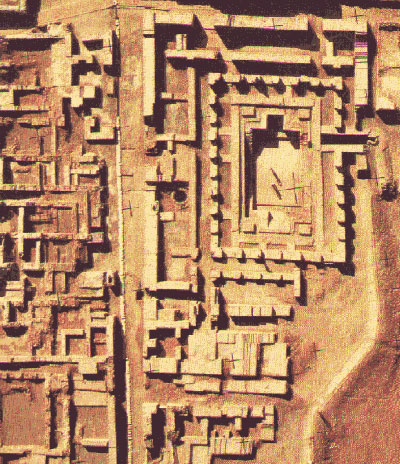
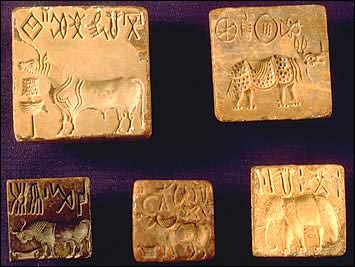
The citizens of the ancient Indian city of Mohenjo Daro were very organized people, which shows through their drainage system, and street grids. This city was occupied in the third millenium B.C., and due to the lack of evidence, archaeologists are still unsure about who were the citizens of this ancient civilization. During many archaeological digs, historians were unable to recover any evidence suggesting one central leader of the government, but it is believed that Mohanjo Daro was governed as a city-state. Seals and similar artifacts show that the people of Mohenjo Daro were excellent traders, who were very clean and modest.
The artifacts that were found suggest that Mohenjo Daro was a very wealthy city, with advanced architecture, where almost every single home was built out of baked-brick. However, evidence showing advanced religious beliefs were not found. The closest thing to a temple found was a pool, which supposedly shows that the people of Mohenjo Daro centered their lives around cleanliness.
This ancient city was excavated many times. The major digs happened in the 1920's and 1930's, while smaller digs took place in the late 1950's.


This ancient city was located in the present-day Pakistan, and many archaeologists state that it was one of the most important cities in the Indus civilization. It was fairly big for that time as well, around 250 acres of land. Mohenjo Daro consisted of a series of mounds, that kept rising as, over time, people built more walla, platforms, etc. for their homes.
One of the most precious artifacts found were sculptures of seated male figures, which were all found broken, suggesting that the foreigners who came to  Mohenjo Daro after it's decline were not very fond of the native people/elders. The decline of this city, as well as the whole Indus civilization is unknown. One of the theories is that the Indus river changed it's flow, which would have greatly affected the city's economy, politics, agriculture and trade. There is also some evidence that flooding caused the end of this great city. Some historians also suggest that the city wasn't abondoned after all, just the newcomers changed the culture of the people already in Mohenjo Daro, by bringing in new ideas and beliefs.


Roach, John. "The Lost City of Mohenjo Daro." National Geographic. National
     Geographic, n.d. Web. 6 June 2011.
     <http://science.nationalgeographic.com/science/archaeology/mohenjo-daro/>.

Thursday, May 5, 2011

Reflection on the Ancient Egypt Unit

The unit about Ancient Egypt has taught me a lot and I have learned a great deal about how the people during that time lived, but also what they depended on. My knowledge of their empire has really broadened after this unit. At the beginning, I didn't really know what kind of role the Nile played in the daily life of Ancient Egyptians, and I had no idea that it was so important to them. After this unit, I know that Ancient Egyptians got food from the Nile, which included birds, as well as many fish and plants. The water from the Nile helped them with farming, because they were able to bulid irrigation channels, which got the water from the Nile to the crops. Without the irrigation systems, all the crops would have dried out, and famine would be a great problem in Egypt. The Nile also enabled trade. With the use of sail boats, Egyptians could use the Nile to get to different places alaong the river, as well as empires and countries abroad the Mediterranean and Red Sea. They got wood, gold and many spices from the nations they traded with. The Nile was also a source of religion for the Egyptians. Many gods were associated with the Nile, and its floods. Egyptians prayed to those gods for succesful farming seasons, etc. For Egyptians, the Nile was life.


During this unit, we had three main projects. The first project we did was a mapping project. We had to pick a partner, and then make a map of the Ancient Egyptian empire, showing the physical features, such as mountains, desserts, and plains, but also mark some of the main cities, and names of land forms, such as the Ethiopian Highlands, and Memphis and Cairo. I really liked this project, because it gave us the opportunity to be creative, and try something new. I liked the fact that we were also able to answer questions, because in our answers we could bring across what we maybe have forgotten, or were unable to show on the map. While I did this unit, I feel that I was quite open-minded. I think this because usually I am the type of person who really enjoys making presentations, and is more comfortable with written forms of assessment, such as essays and tests, so I really had to go into this project with an open mind, and try my best to enjoy it, and bring all my ideas across in a form of a map. I really gave it my best effort, so I believe that I did a good job on the project.

The next project we did was a really fun project, where we had to make our own recreation of Egyptian Art, which I worte about in my previous blog post. I think that this project showed my skills as an inquirer. This project really got me interested in Egyptian culture, and I started getting really curious about it. In order to do my drawing, I did quite a lot of research on Egyptian gods, as well as what were their roles in the Egyptian culture, and how they helped and contributed to the society.


In my opinion, probably the bigggest project of this unit was the presentations we had to make. I did the presentation on Egyptian medicine. I think that this project proved that I was quite knowledgeable. I did a lot of research on this part of Egyptian life, and I found a lot about amulets, as well as about some surgeries Egyptians performed, and medications and creams they used. I think that my presentation was quite detailed, and I think that the audience learned a lot.


One of the activities that I personally enjoyed the most was jeopardy, where we summed up the whole unit, and where we answered questions in groups. Some of the questions were harder, and could earn your group more points, while others were a little bit easier. In the game of jeopardy, I think that I have proven that I was a risk-taker, because I agreed to try the hardest questions first, even though I knew that there was a risk of us getting it wrong, and losing the opportunity to earn points. However, the risk turned out to be good in most situations, and we answered quite a few of the questions right :). the questions that I enjoyed ansewering the most were the questions about the Nile river, and Egyptian gods, because I felt that I had the most knowledge in those parts of Ancient Egyptian everyday life.


Thursday, April 21, 2011

Egyptian Art


My piece of Egyptian art represents the blessing of Pharaoh's son. Pharaoh and his wife are standing in front of godesses Hathor and Isis, who are both goddesses of children, motherhood, etc. Behind the two godesses are the pyramids which represent the little Pharaoh's ancestors, who are also attending the ceremony, and giving the future ruler a blessing. In the background you can also see Horus and Thoth. Horus is the falcon god, and the king of all gods. He is represented in the art piece because he is the one who will lead the future Pharaoh in his journey of becoming a great ruler of Egypt. The god of scribes and writing is supposed to represent the knowledge and intelligence every Pharaoh should have in order to be a successful ruler. The river on the side, as well as the boater, represent what the young pharaoh will rule over. The Nile is the most important part of Egypt, and without it the empire wouldn't have existed. The boater is a middle-classed man, who represents all the people of Egypt the Pharaoh will have to look after, and take care of.

Wednesday, March 30, 2011

How do features such as rivers, lakes and mountains help unite people, or keep them isolated from each other?

Natural features, or landforms affect a lot on people being united and isolated from each other. Two landforms that affected Egypt the most were the Nile and the Sahara Desert that surrounds its banks. The Nile was a life giver, as well as well as a life taker. The Nile gave Egyptians farming land, which enabled them to grow many different crops. Nile also lead the people of the Nile to make amazing invantions. To travel along the Nile, Egyptians invented ships, that were made out of bundles of reeds, and later out of wood. the most important discovery was the first sun-based calendar. Egyptians used the calendar to keep track of the annual flooding. The Nile was the source of many religious beliefs for the Egyptians. The God of the Nile was called Hapi, and he was always portrayed as a man with a papyrus plant in Egyptian art. It was believed that he controlled the annual floods, and many celebrations were hel dto thank him. However, the Nile isolated people from each other. At first, Egypt was a set of tiny villages. As the population grew, villages turned into towns, and some towns became capitals of city-states, called nomes. Nubia represented the crossing line, between the two seperate kingdoms, Upper and Lower Egypt. However, that was also overcome, when some unknown king united the kingdoms, and created a civilization that laste for three thousand years. Another problem was the flooding that wasn't always consistent. Sometimes, the rain fell too lightly, preventing floods, and enabling crops to dry by the hot desert sun. The people of Upper and Lower Egypt worked together to create irrigation systems, and that also brought them together. Other times, there was too mich flooding, washing the crops away, and drowning people and their cattle. Egyptians were unable to do anything about this, however. Another isolation was the Sahara. Sahara surrounded the Nile River and its banks, making it very hard for the Egyptians to interact with other city-states, and participate in trade. Egyptians traded over the Red and Mediterranean Sea, because the Sahara prevented them from interacting with other African city-states.

Monday, March 21, 2011

The Nile River

The sun is fading in the horizon, turning an orange color, making the waters of the Nile glisten. As we sail downstream, I look over my shoulder, where my father and the landlord are standing, debating over whether the landlord should have the barley or the wheat. My mother and sister are looking over, as well, praying that we won't lose our land, and all our crops. My father can have quite a temper sometimes. My uncle is saying something, but we cannot hear him. He takes the throwstick, and aims at a couple of catfish swimming by. He catches a small one, and a smile of victory lightens up his face. My father and the landlord are way out of the view, and Mother has another worry. She doesn't want us to reach Nubia, and all the rapids and waterfalls. She tells my uncle to be careful, and since he accomplished what he wanted to, and got dinner for his family for tonight, we turn the sail carefully, and head back. The journey took quite a long time, and when we came back, dark surrounded the grassy plain in the distance. As I step onto the ground, my foot sinks into the silt, which was deposited by the annual flood, just a few months ago. Our crops bloomed since then, but our landlord wants much more rent then it was originally planned, so Father is very upset. We hardly have any barley left, and there is no more onions, whatsoever. But, we will manage. I hear a herd of elephants far away, and I rush into the straw house. Tomorrow, my sister is meeting up with her soon-to-be husband, and she seems okay with it. Mother says that she is surprised, but happy that she took it with such ease. She will be moving all the way north, to Lower Egypt. I think she will be happy there. She won't have to worry much, because a lot of silt is deposited there, so the soil is very fertile, and her family can raise lots of crops. Tomorrow, Father and I will go to the market, and trade some of our crops for the cedar and gold from Nubia. I hope all goes well. The smell of the fresh air fills my nostrils, and I look over the tall trees, and the lush green grass, thinking about one of our neighbors, who died a few days ago. He was a strange man, and didn't like children running around, carrying ducks and geese, for their parents to prepare for lunch. He will be mummified tomorrow, but people are saying that Hades won't accept him well. After all, the man wasn't one of the welathiest. Some of the sailing boats are still on the river, waiting for any fish to swim by. I take one last look at the beautiful scenery, and rush back inside the house. Tomorrow will be a long day.

Mummification (Part 2)

1. What is the relationship between mummification and the natural environment? Provide specific examples from what you read during the previous lesson.
The relationship between mummification and the natural environment is very strong when it comes to unintentional mummification. There are many ways that a cadaver can be preserved in the natural environment. One of the ways is by freezing. The cold, ice and snow can cause this in high mountaneous areas, which include the Alps, the Himalayas, etc. One of the examples of this kind of preservation is Otzi, the iceman. He was recovered by a pair of hikers, in the Alps, on the border of Austria and Italy. The hikers thought that someone was murdered, and called the police, but archaeologists realized that they actually found an amazing historical find, that will help historians a lot in their research. Another way of natural mummification is through very warm, desert-like climate. Some of the mummies found have been recovered in deserts, where they have been completely dried up by the sand and the dry desert air, and, in that way, prevented from decomposing. Another condition that bodies are preserved in are mossy bogs. Bogs are made up of decayed vegetable matter, and serve as  great natural preservers. Some bogs can even preserve the cadaver's brain, which can help historians learn more about the evolution of humans. Mummies are a great primary resource, and they have helped historians and archaeologists a lot, telling them more about the lifestyle, culture, and traditions of the ancient people.

2. What are some of the reasons,mummies have been made?Apart from people being naturally mummfied, there are a lot of cultures who intentionally mummified their dead. One of the reasons for that is an afterlife. People in ancient civilizations believed that once someone dies, their soul moves on to the underworld, where it lives forever. It was believed that the wealthier you are, the better afterlife you would have, because you would have more valuables to bring with you to the afterlife. Another reason people were mummified is because of sacrifices. In some civilizations, people were sacfriced, and then mummified, in honor of the gods. The last reason people were intentionally mummified is because they commited a crime. In ancient times, if you commited a crime, or broke a law, some ancient civilizations would sentence a death penalty, and then mummify the corpse afterwards.

Sunday, March 20, 2011

Mummification

Today, we read an article written by John Roach, on July 9th, 2001. He wrote it for the National Geographic News, and the article was about mummies, and how they served, and still do, as a way to keep us immortal. Below are some of the words that were unfamiliar to me:
Cadaver- Cadaver is a dead body, usually human; a corpse.
Mossy bogs- A bog is wet, spongy ground with soil composed mainly of decayed vegetable matter.
Portal- A portal is a a door, gate, or entrance, especially one of imposing appearance, as to a palace. A portal can also be referred to as a portal in time. etc.
Cryonics- Cryonics is when a body is frozen just after the death, so that the body won't decompose.


What is a mummy?
A mummy is an ancient cadaver, whose soft tissue has partially or wholly resisted decay. A mummy can be made by the environmental conditions of a certain place, or it can be man-made.
In what parts of the world have mummies been found in?
You can find mummies everywhere, in bogs, ice-cold mountain peaks, as well as hot deserts. The oldest known mummies were recovered in Chile, South America, and date back to around 7,000 years ago. Those mummies are called "Chincorro", and were mostly non-decayed bodies of children. It is believed that the parents mummified their children, to make their lives longer. Mummies have also been recovered in the Andean peaks, and some were even found in the Alps (Otzi, the iceman). Another set of mummies was found in northwestern China, they were so-called Xinjiang mummies. They were 4, 000 years old. And, finally, probably the most famous place for recovering mummies, is Egypt, where numerous important finds were made.
How did the the Ancient Egyptians preserve their dead?
Ancient Egyptians had a very distinctive process of mummification, and they thoroughly described it on many of their hieroglyphic writings and recordings. Firstly, the vital organs of the body were taken out and placed into special jars, that were put inside the tomb, around the mummy. Then, the mummy was wrapped in a very special linen, and then put into a sarcophagus.  At the end, Egyptians put objects like boats, gold and weapons into the tomb, so that the mummy would have a peaceful afterlife. Of course, the richer you were the more objects were put into your tomb, and the better afterlife you would have.
Why do you think ancient Egyptians took such care to embalm their dead if the desert could do the job for them?
Just as I said above, the Egyptians believed in an afterlife. They thought that the better burial practice they performed, the person who died would have a better afterlife. Egyptians believed in immortality, or that your soul never dies, just moves on to the underworld. They put objects in the tomb so that the one who passed away would have gold, and other necessities in the underworld, and would live in the underworld in peace.
What features of the natural environment can cause bodies to be mummified unintentionally?
There are different environmental factors that cause the body to get mummified. Some bodies get frozen in cold areas, and the ice and cold stop them from decaying. In very warm areas, the body is completely dried up, and the sand protects it from decomposing. Bogs are a very natural preservers, and the mummies found in bogs can also have a preserved brain, which can be great help to historians and scientists. 
According to current scientific beliefs, what are some reasons people were intentionally mummified?
There are different reasons why mummies were intentionally mummified. One of the theories is that mummies were mummified   so that they could be immortal, or move on to the underworld, and have a peaceful afterlife. Another theory is that people were killed and then mummified as a sacrifice for the gods. Another theory is that when people broke a law, or committed a crime, they were executed, and then mummified.


List at least five questions that you would ask about a place to determine whether it might be a promising location to find human mummies. Your questions should related to climate, culture, religion and other factors that you think are important.
1. What is the climate of the area like, and does it have some distinct landforms, such as a desert, high mountains, bogs and swamps, etc?
2. What people lived at this area long ago, and what were their religious beliefs?
3. Is it common for mummies to be found in this area? If so, were the finds of mummies that were intentionally or unintentionally buried?
4. If there were any ancient civilizations in the area, how long ago did they settle there, and how long did they stay?
5. What were some of the traditions of the people living there? 


Thursday, February 10, 2011

"Mesopotamia: The Fertile Crescent" Unit Reflection

In 2-3 sentences for each topic, summarize what you learned about the following:
     The domestication of plants and animals   
     The transition from hunter-gatherer communities to the first civilizations
     Early religion and beliefs

1. The domestication of plants and animals means that certain organisms started relying on people for survival, while people got different products from them (including meat, milk, vegetables, fruits, wool, etc). The domestication of plants and animals led to the division and specialization of labour, because not as many people had to worry about food, so some of them became crafters, judges and musicians.
2. The hunter-gatherers were not considered a civilization, for several reasons. Since hunter-gatherers did not farm, and didn't develop domestication yet, they didn't have a stable food supply. The hunter-gatherers did not have a developed government and a developed culture. All of this came afterwards, once people started settling. This change, however, didn't happen over night (it took lots of generations).
3. The earliest religions were mostly based on polytheism, or the belief in many gods. Usually, there was a god for each thing that was considered important in the empire (sometimes it was sun, water, air, etc.). There was also the main god, who ruled over all the others. The people back then were very religious, and prayed in zuggurats and temples, as well as made animal and sometimes human sacrfices.

Imagine someone saying to you, "Learning about the Sumerians isn't very
important since they're long gone!" What would you tell them in order to change their mind?

To change their mind, I would tell them about all the Sumerian accomplishments, without which we wouldn't be able to have such a carefree life. Firstly, the Sumerians invented the wheel, which is today used for cars, planes, trucks and other transportation devices. The Sumerians invented the alphabet, which we cannot live without today. Back then, it was used to help with trade. The citizens of Sumer were also one of the first ones to invent geometry and mathematics, as well as law and order.